ABSTRACT
The objective of this study was to analyze artificial intelligence in language learning, as either a tool or a threat. Methodologically, it was based on a descriptive quantitative study that utilized a survey method, using a structured Likert scale questionnaire. This instrument was validated by experts and had a Cronbach’s alpha coefficient of 0.80, indicating acceptable reliability. As a result, the development of the four skills was observed: speaking, through the creation of innovative oral activities; listening, through participation in listening comprehension exercises; reading, through the comprehension of various texts; and writing, through the production of written work. In conclusion, the use of artificial intelligence has been perceived as a tool when employed for academic progress and for life; conversely, it has constituted a threat when used merely to complete tasks without promoting meaningful learning.
Descriptors: Artificial intelligence; English language learning; tool; threat. (UNESCO Thesaurus).
RESUMEN
El objetivo de este estudio fue analizar la inteligencia artificial en el aprendizaje de lenguas, ya sea como herramienta o amenaza. Metodológicamente, se basó en un estudio cuantitativo descriptivo que utilizó un método de encuesta, utilizando un cuestionario estructurado a escala Likert. Este instrumento fue validado por expertos y con un coeficiente alfa de Cronbach de 0,80, lo que indica una fiabilidad aceptable. Como resultado, se observó el desarrollo de las cuatro habilidades: la oratoria, mediante la creación de actividades orales innovadoras; la escucha, a través de la participación en ejercicios de comprensión auditiva; la lectura, a través de la comprensión de diversos textos; y la escritura, a través de la producción de obras escritas. En conclusión, el uso de la inteligencia artificial se ha percibido como una herramienta cuando se emplea para el progreso académico y para la vida; por el contrario, ha constituido una amenaza cuando se utiliza únicamente para completar tareas sin promover un aprendizaje significativo.
Descriptores: Inteligencia artificial; aprendizaje del inglés; herramienta; amenaza. (Tesauro UNESCO).
INTRODUCTION
English is a global language, serving as a means of communication between people from different countries; therefore, learning it is essential from early childhood education through college. According to Rodríguez (2024), learning English is indispensable, as it serves as a channel of communication between people in both academic and professional contexts.
Currently, artificial intelligence is a valuable resource for language learning, as it offers teachers and students various solutions to facilitate effective practice. One such alternative is its interactive tools, which have been fundamental to the development of the four skills: speaking, reading, writing, and listening. Awang et al. (2025) asserts that artificial intelligence is a tool closely aligned with human behavior. According to Atencio (2023), tools such as ChatGPT represent effective resources.
In this learning process, students require a learner-centered approach supported by participatory teaching leadership that promotes the participation of everyone both inside and outside the classroom. From this perspective, Resto et al. (2024) states that the 21st century demands horizontal teaching leadership focused on active student participation to achieve an effective teaching-learning process.
According to Isea et al. (2024), in an educational context, human talent always stands out, as it is grounded in the interaction between teachers, students, and the community. To this end, it is important to consider each learning style to achieve meaningful learning based on the particularities of each learner. In this regard, Isea et al. (2023) states that the current times require a comprehensive education that transcends knowledge through the socialization of learning. This is achieved using tools adapted to current realities, in this case, AI as a valuable resource for achieving innovative academic progress.
However, it has become evident today that, due to the large number of students in a classroom or the limited variety of teaching strategies used, teachers often overlook individual needs and focus instead on meeting their course objectives within the timeframes set by their institutions; consequently, they do not delve deeply into the appropriate tools for addressing each learning style.
Given the above, it is necessary to use various resources that support teachers in developing the four language skills within the stipulated time. For example, Mendoza et al. (2025) state that AI serves as a support tool for academic writing, which enhances writing in English.
In this vein, Mendoza et al. (2025) states that ICTs promote a collaborative and innovative process. Lee et al. (2025) assert that artificial intelligence tools foster an environment where people can act authentically and in real time.
Minna and Juhani (2019) state that smart technologies promote social, environmental, and other forms of sustainability. Consequently, both teachers and students can use them throughout the learning process as tools to supplement their knowledge. For his part, Wei (2023) asserts that the impact of artificial intelligence on the language learning process is positive. Similarly, Zhang (2025) states that artificial intelligence helps optimize English language learning.
From this perspective, it is necessary to align with the findings of Ramírez et al. (2026), who asserted that English language learning has undergone transformations due to the use of tools such as AI. However, to further explore this topic, it is important to investigate it in depth; therefore, this study aims to analyze artificial intelligence in language learning, whether as a tool or as a threat.
METHOD
The quantitative methodology was used, as a survey was carried out to examine whether AI is perceived as a tool or a threat. The study was descriptive in nature, exploring faculty members’ perspectives on the use of AI to ascertain whether they consider it a tool or a threat.
The total sample consisted of 150 university-level teachers, who were selected based on the following criteria: teachers with over five years of professional experience, working at the university level, and with experience in the use of technologies, particularly AI-related tools.
As mentioned earlier, the method used was a survey, and the instrument was a questionnaire with a Likert scale, which achieved a reliability coefficient of 0.80 according to Cronbach’s alpha. Response categories included: excellent, very good, good, fair, and poor, as well as frequency-based (always, almost always, sometimes, almost never, and never), depending on the aspects being investigated.
The analysis of results was presented through figures detailing the statistics derived from the surveys administered to teachers, based on their experiences.
RESULTS
The findings are based on teachers’ perceptions, which reflect their views on whether AI in language learning is a tool or a threat.
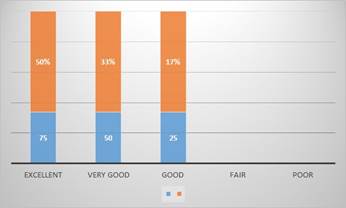
Figure 1. The positive use of innovative strategies in language learning.
Elaboration: The authors.
As shown in Figure 1, 50% of teachers rate the use of innovative strategies as excellent, 33% as very good, and 17% as good. Based on these results, it is worth citing Atencio (2023), who proposes using innovative tools ethically to foster critical thinking.
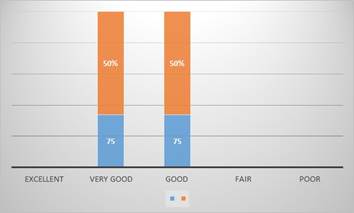
Figure 2. AI for educational transformation.
Elaboration: The authors.
Figure 2 indicates that 50% of teachers consider AI to be very good as a transformational tool, while the remaining 50% consider it to be good. In this vein, Wei (2023) asserts that the use of AI contributes to transforming language teaching by fostering an interactive, personalized, and communicative environment.
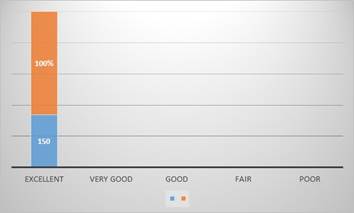
Figure 3. AI and ethics in the language learning process.
Elaboration: The authors.
According to Figure 3, 100% of teachers believe that AI is an ethically solid tool in language learning. This finding is consistent with Isea et al. (2024), who suggest an innovation process grounded in ethics to achieve various goals with human talent.
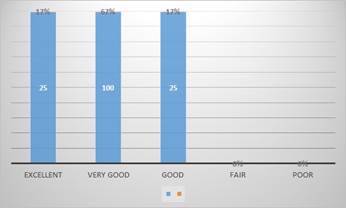
Figure 4. Problem solving through AI.
Elaboration: The authors.
As shown in Figure 4, 17% of teachers state that AI contributes to problem-solving in an excellent way, 67% consider it to be very good, and 17% consider it to be good. Awang et al. (2025) assert that artificial intelligence leads to problem-solving through decision-making, to select the most suitable alternative for responding to everyday situations.
Development of language skills
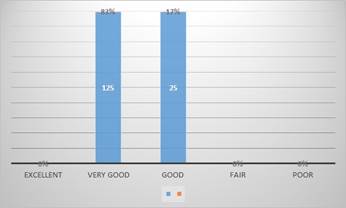
Figure 5. Development of writing skills through AI.
Elaboration: The authors.
According to Figure 5, 83% of teachers believe that AI is very effective in developing writing skills, while 17% believe it is effective. In this context, Mendoza et al. (2025) note that writing skills have enabled students to express their ideas spontaneously.
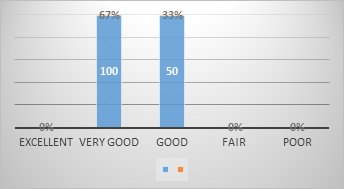
Figure 6. Development of oral skills through AI.
Elaboration: The authors.
According to Figure 6, 67% of teachers believe that AI contributes to the development of oral skills, while 33% believe it contributes to a certain extent.
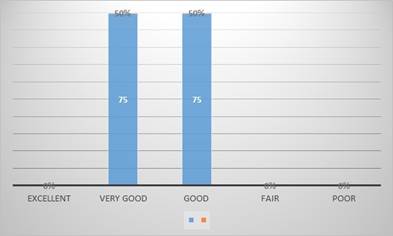
Figure 7. Development of listening skills through AI.
Elaboration: The authors.
According to Figure 7, 50% of teachers believe that AI significantly improves listening comprehension, and 50% believe it improves it to a good extent. Zhang (2025) states that leveraging artificial intelligence tools can contribute to the development of learners’ communication skills.
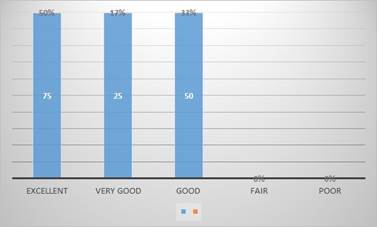
Figure 8. Development of reading skills through AI.
Elaboration: The authors.
According to Figure 8, 50% of teachers believe that AI significantly improves reading comprehension, 17% believe it improves it very much, and 33% believe it improves it. Lin et al. (2025) state that AI serves as a supportive strategy for reading comprehension in English.
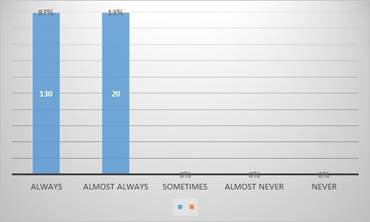
Figure 9. AI as a tool.
Elaboration: The authors.
According to Figure 9, 87% of teachers believe that AI is always a tool, and 13% believe that it is almost always a tool.
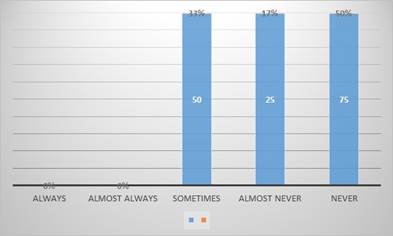
Figure 10. AI as a threat.
Elaboration: The authors.
According to Figure 10, 33% of teachers believe that AI is sometimes a threat, 17% almost never, and 50% never consider it a threat, indicating that opinions are divided, as they state that it all depends on the purposes for which AI is used. Furthermore, in the educational context of language teaching, AI should be used as a support resource for appropriate practice and not relied upon entirely in various activities.
DISCUSSION
In the previous section, it was noted that 50% of teachers consider the use of innovative strategies to be excellent, 50% of teachers consider AI to be a very good transformational tool, and 100% of teachers believe that AI is an ethically sound tool in the language learning process.
Furthermore, it was found that AI contributes to problem-solving in an excellent way, and 67% consider it to be very good. Likewise, 83% of teachers believe that AI contributes to the development of writing skills very well.
67% of teachers consider that AI contributes to the development of oral skills very well; similarly, 50% of teachers consider that AI improves listening comprehension very well, and 50% consider it good. Regarding reading skills, 50% of teachers believe that AI improves reading comprehension excellently. According to Resto et al. (2024), it is essential to promote a teaching leadership approach that takes learning styles into account to achieve optimal student performance.
Finally, 87% of teachers believe that AI is always a tool; conversely, 33% of teachers believe that AI is sometimes a threat, 17% almost never, and 50% never view it as such.
Isea et al. (2023) states that the current educational curriculum demands innovative practices to achieve goals; therefore, educational planning must be based on a teaching process supported using innovative tools such as AI, to promote optimal foreign language learning.
From this perspective, this finding aligns with Lee et al. (2025) who propose promoting the use of natural language within interaction. Mendoza et al. (2025) state that ICTs drive educational transformation to achieve quality education.
Minna and Juhani (2019) establish that intelligent technologies foster relationships between people.
These contributions lead to the assertion that the use of innovative tools such as AI strengthens the educational system; particularly when it comes to language learning, as these tools offer a wide range of learning opportunities for the development of the four language skills: speaking, reading, writing, and listening.
In the words of Li (2022), the use of AI promotes the optimization of natural language and student enthusiasm for learning it. Lin et al. (2025) consider it necessary to apply AI tools as a support for learning in an interactive manner.
According to Ramírez et al. (2026), the use of AI makes it possible to personalize English language learning by considering each student’s unique characteristics and learning styles. This would apply to the learning of any language, since each language requires individualized attention that centers on each student’s learning styles in order to achieve a high-quality education.
Li (2022) states that the use of AI helps to incorporate all possible suggestions for achieving meaningful learning using various methods. According to Rodríguez (2024), the use of AI via mobile devices enhances learning. Consequently, teachers can draw on a variety of AI resources and tools to help students improve their effective use of the target language in their daily learning practices.
Another key point worth noting is that AI can be leveraged to reinforce vocabulary, grammar, pronunciation, and fluency, without the need to replace human teachers.
CONCLUSIONS
The use of artificial intelligence has become increasingly essential in contemporary education, as many teachers, students, and even researchers rely on this tool to carry out various academic tasks. At the university level, this tool is extremely useful, as it is widely used to support diverse academic activities across different fields of study, including language learning.
This study found that teachers expressed more positive than negative opinions in the questionnaire administered. However, it was noted that the use of AI is rarely viewed as a threat; nevertheless, it should be used in language learning as a support and reinforcement tool without relying on it for everything.
Given the results presented, it is recommended that AI should be strategically integrated as a learning tool to foster autonomy in language learners, serving to supplement what is learned in the classroom.
Furthermore, it is recommended that evaluations should be conducted at the end of each course to monitor whether AI supports student learning.
It is also suggested that students should be taught about how to use the tools offered by AI to improve their vocabulary, pronunciation, grammar, and fluency.
It is also advisable to conduct studies based on other approaches to investigate other relevant aspects of the benefits of AI in language learning.
Likewise, a study focused solely on the risks associated with AI is suggested, with the aim of comparing whether other contexts share similar views to those described here in the results.
Finally, ongoing training for both teachers and students is recommended to ensure an optimal learning process that keeps pace with day-to-day changes.
FUNDING
Non-monetary.
ACKNOWLEDGMENTS
We would like to thank everyone who contributed to this study for their valuable contributions.
REFERENCES CONSULTED
Atencio, R. (2023). Inteligencia artificial en educación. Cienciamatria. Revista Interdisciplinaria de Humanidades, Educación, Ciencia y Tecnología, 9(17), 1-3. https://n9.cl/7i9yx
Awang, L. A., Yusop, F. D., & Danaee, M. (2025). Current practices and future direction of artificial intelligence in mathematics education: A systematic review. International Electronic Journal of Mathematics Education, 20(2), em0823. https://n9.cl/z5k88
Isea, J., Infante, M., Romero, A., & Comas, R. (2024). Human talent as a driving force in the management of ethics in the sustainable university. Salud, Ciencia y Tecnología - Serie de Conferencias, 3, 672. https://n9.cl/jbjohe
Isea, J., Gómez, I., & Comas, R. (2023). Interaction between university extension and curricular innovation: a collaborative and co-creative perspective in higher education. Revista Conrado, 19(3), 469-481. https://n9.cl/jz6dwg
Lee, D., Son, T., & Yeo, S. (2025). Impacts of interacting with an AI chatbot on preservice teachers' responsive teaching skills in math education. Journal of Computer Assisted Learning, 41(1), e13091. https://n9.cl/ckmh1
Li, Y. (2022). Teaching mode of oral English in the age of artificial intelligence. Frontiers in Psychology, 13, 953482. https://n9.cl/g0xej
Lin, C. C., Lin, T. H., & Tang, C. K. (2025). Enhancing English reading comprehension, learning motivation and attitude through AI‐supported pre‐reading scaffolding. Journal of Computer Assisted Learning, 41(6), e70150. https://n9.cl/np5v1t
Mendoza-Vega, A., Ruiz-Andaluz, R., Jaramillo-jimbo, J., & Isea-Arguelles, J. (2025). Use of artificial intelligence platforms in academic writing. Noesis, 7(14), 331-349. https://n9.cl/j4z05
Mendoza, A., Zambrano, P., González, P., & Ulloa, P. (2025). ICT to enhance innovation in educational research: trends, challenges and opportunities. Noesis. Revista Electrónica de Investigación, 7(14), 388-405. https://n9.cl/xpok36
Minna, M., & Juhani, T. (2019). Smart technologies and corporate sustainability: The mediation effect of corporate sustainability strategy. Computers in Industry, 108, 178-185. https://n9.cl/5r7rv
Ramírez Morán, L., Limongi Basantes, S., Salinas Montemayor, A., & López Villegas, T. (2026). AI and machine learning in English teaching: A systematic review of acquired language competence. Revista InveCom, 6(2), e602034. https://n9.cl/18sp9ru
Resto, E., Lera, L., Poleo, A., & Von Feigenblatt, O. (2024). Educational leadership style in the teaching process: a literature review. Anales de la Real Academia de Doctores de España, 9(2), 289-308. https://n9.cl/zqzv93
Rodríguez, J. (2024). Boosting Artificial Intelligence-mediated English Language Certification in Senior Students. RIDE. Rev. Iberoam. Investig. Desarro. Educ, 14(28), e625. https://n9.cl/s7oni2
Wei, L. (2023). Artificial intelligence in language instruction: impact on English learning achievement, L2 motivation, and self-regulated learning. Frontiers in psychology, 14, 1261955. https://n9.cl/ha6cqu
Zhang, Z. (2025). Enhancing English Listening Comprehension via AI-based Adaptive Learning Platforms Incorporating Speech-to-text and Predictive Analytics. Systems and Soft Computing, 200418. https://n9.cl/4r4i2o
©2026 by the authors. This article is open access and distributed under the terms and conditions of the Creative Commons Attribution-NonCommercial-ShareAlike 4.0 International (CC BY-NC-SA 4.0) license (https://creativecommons.org/licenses/by-nc-sa/4.0/).